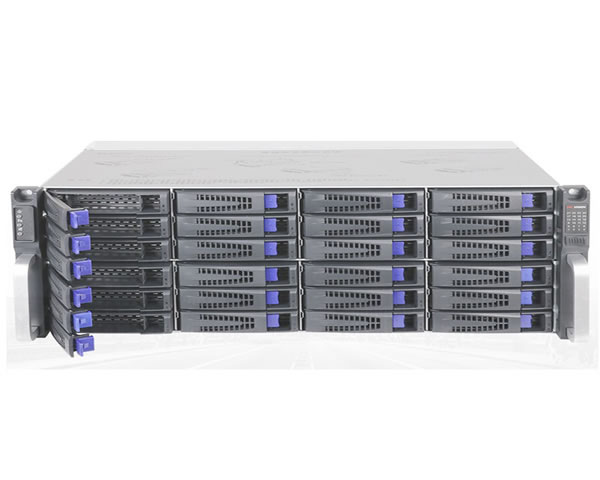
introduction: in high-concurrency scenarios, renting a computer room in hong kong to ensure stability and latency is a common strategy for many companies in asia pacific and mainland china. hong kong’s geographical location, international export links and mature infrastructure provide natural advantages for cross-border access and global distribution. however, to achieve predictable performance, a comprehensive evaluation must be conducted based on network architecture, redundancy design, bandwidth flexibility, and operation and maintenance capabilities.
why choose hong kong computer room for high concurrency scenarios?
the hong kong computer room is close to mainland china and connected to multiple international backbone networks, making it suitable for applications that require cross-border access or global distribution. for highly concurrent businesses such as e-commerce promotions, media distribution and real-time communications, hong kong is conducive to reducing round-trip delays and improving export stability. in addition, the mature data center ecosystem facilitates the deployment of redundancy, multi-operator access and third-party network optimization services.
network connectivity and bandwidth requirements
in high-concurrency scenarios, link quality and scalability are more important than pure bandwidth values. evaluate upstream operators, transit nodes, packet loss rate and jitter indicators; confirm that the computer room supports bgp multi-line, can quickly expand bandwidth and provide real-time traffic data. reasonable bandwidth reservation and peak elasticity strategies can avoid delay spikes caused by congestion during burst traffic.
backbone lines and multi-line access
high-quality backbone lines and multi-line access can reduce cross-border delays and single-link risks. verify whether the computer room has direct connection to mainland china or high-quality transit, and understand the operator's interconnection partners and routing strategies. combined with technologies such as intelligent routing or sd-wan, it can automatically switch when the link is abnormal, ensuring access stability and availability during high concurrency.
latency optimization strategy
reducing latency requires collaborative optimization at the network, cache and application layers. use cdn to cache static resources and distribute hot traffic nearby; shard databases and sessions or separate reading and writing; optimize transmission protocols (such as http/2, quic) and tcp parameters, and deploy edge nodes or direct dedicated lines as needed to reduce the number of round trips and transmission delays.
stability and capacity planning
stability comes from redundant architecture and capacity reservation. develop capacity plans based on business peak predictions, and adopt multi-availability zone deployment, hot and cold backup, and cross-machine room synchronization strategies to avoid single points of failure. regularly conduct stress tests and fault drills to verify service recovery capabilities and performance when traffic surges or components fail.
load balancing and failover
by properly configuring load balancers, global traffic management, and dns policies, request pressure can be distributed under high concurrency and fast failover can be achieved. combining health checks, session persistence or stateless design to reduce switching costs; and setting circuit breakers and downgrade mechanisms for external dependencies to avoid cascading impacts caused by link or service abnormalities.
operation, maintenance and monitoring requirements
the focus of operation and maintenance lies in end-to-end performance monitoring, real-time alarms and rapid response. establish a monitoring system for link quality, bandwidth utilization, response delay and error rate, and use apm, log aggregation and visual dashboards to locate faults. clarify the sla and linkage process with the computer room provider to ensure that problems can be discovered in time and handled collaboratively.
summary and suggestions
it is recommended that on the path of "how to choose to rent a hong kong computer room to ensure stability and delay in high concurrency scenarios", you should first conduct traffic and demand analysis, and then evaluate the network topology, multi-line access capabilities, bandwidth flexibility, redundancy design and operation and maintenance support of the computer room. prioritize the verification of backbone direct connection, link quality and monitoring and alarm mechanisms. through drills and phased migration, we will gradually go online and ensure stability and controllable delays.
- Latest articles
- Enterprise-level Deployment Tencent Cloud Korea Vps Load Balancing And High Availability Solution Implementation Practice
- How To Upload And Distribute Japanese Private Vps Video Content To Improve User Viewing Experience
- Detailed Explanation Of The Application Scenarios Of Cn2 Japan Server In Overseas Backup And Disaster Recovery
- Qualifications And Network Connectivity Points That You Must Pay Attention To When Choosing A Cn2 Partner In Cambodia
- Analysis Of The Advantages Of German Independent Servers In Cross-border Data Processing From The Perspective Of Regulatory Compliance
- A Practical Guide To Listing And Deploying Taiwan Cloud Server On Amazon
- Research On The Access Speed And Conversion Rate Of E-commerce Websites After Using Japanese Line CN2 Transfer
- Technical White Paper South Korea’s Large Bandwidth Server Rental Architecture And Bandwidth Control Strategy
- A Must-read For Beginners: Practical Methods For Optimizing Performance After Downloading And Installing Vietnam Zombie Servers
- Shanghai Japan Cloud Server Network Latency Test And Optimization Implementation Plan
- Popular tags
-

How To Configure Low-latency Multi-IP Hong Kong Station Cluster Servers To Achieve Multi-line Redundancy
This article introduces how to configure low-latency multi-IP Hong Kong site cluster servers to achieve multi-line redundancy and high availability. It offers practical strategies and key implementation points from the perspectives of network architecture, IP planning, routing redundancy, load balancing, security, and monitoring, suitable for SEO and GEO optimization needs. -

Compliance And Registration Matters To Note When Choosing Hong Kong Data Center WiFi For Free Downloads
Guidelines on compliance and registration matters to be noted when providing free Wi-Fi download services in Hong Kong data centers, including regulatory differences between Hong Kong and the mainland, personal data protection, content copyright, cross-border data transmission, and key points of data center contracts, to help operators reduce legal and operational risks. -

Analysis Of The Characteristics And Application Scenarios Of Mixed 16 Hong Kong Site Group
This paper analyzes the characteristics and application scenarios of mixed-use 16 Hong Kong site groups to provide guidance and suggestions for SEO optimization.